October 22, 2026

Now featured on UC Compass, the UC Ready designation recognizes Urgent Care organizations that have adopted a structured, standards-aligned approach to assessing and supporting clinician readiness during onboarding. The designation highlights employers that are committed to helping clinicians build the knowledge, skills and confidence needed to thrive in the Urgent Care environment. Make sure to filter “UC ready” to see your list of options
For job seekers, UC Ready serves as a trusted indicator that an organization values professional development and has invested in a thoughtful onboarding process. For employers, it offers a way to demonstrate their commitment to workforce excellence, quality care and continuous improvement. As Urgent Care continues to grow and evolve, initiatives like UC Ready help connect talented clinicians with organizations dedicated to setting them up for success from day one.
Explore UC Ready employers on UC Compass and find an organization committed to helping you succeed from day one.
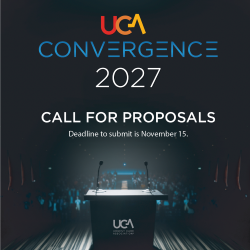
Help shape what comes next for Urgent Care at UCA Convergence 2027.
We’re inviting clinicians, operators, executives, researchers, educators, innovators, advocates and industry partners to propose practical, credible and engaging contributions that can help the Urgent Care community make better decisions, improve care, strengthen organizations and advance the field.
Have expertise, evidence, experience, research or a tested approach to share? 𝗦𝘂𝗯𝗺𝗶𝘁 𝘆𝗼𝘂𝗿 𝗽𝗿𝗼𝗽𝗼𝘀𝗮𝗹 𝗯𝘆 𝗡𝗼𝘃𝗲𝗺𝗯𝗲𝗿 𝟭𝟱.

UCA’s Industry Perspectives series brings practical ideas, trends, and insights from companies working alongside you in the Urgent Care space.
Procedures stall when room setup depends on memory.
In this free Industry Perspectives article, Bionix® and Owen Dahl show how standardized readiness, including illuminated tools, ReadyHub™ staging and preparation guidance, helps Urgent Care teams prepare consistently on every shift.
Industry Perspectives are sponsored content.


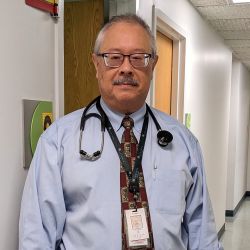
The College of Urgent Care Medicine is proud to welcome David A. Miller, MD, MHA, CHCEF, FCUCM, FAAFP, in our latest class of Fellows.
Dr. Miller brings more than 30 years of experience in medicine, with a career spanning primary care, Urgent Care, clinical leadership and healthcare administration. A longtime advocate for accessible, high-quality care, he developed and implemented an Urgent Care program at a federally qualified community health center and spent more than a decade providing clinical and administrative leadership for the program.
Throughout his career, Dr. Miller has balanced patient care with broader healthcare leadership. He currently serves as a healthcare executive overseeing a wide range of clinical and operational services while continuing to practice as an Urgent Care clinician. His experience also extends to emergency management, disaster relief, physician leadership and community service.
A dedicated leader within the medical profession, Dr. Miller has held leadership positions in professional organizations and has been recognized for his contributions to Family Medicine, including being named Missouri Family Physician of the Year in 2021.
Dr. Miller’s longstanding dedication to patient care, clinical leadership, community service and the advancement of Urgent Care reflects the values recognized through Fellowship. We are proud to welcome David A. Miller, MD, MHA, CHCEF, FCUCM, FAAFP, as a Fellow of the College of Urgent Care Medicine.

The College of Urgent Care Medicine is proud to welcome Katlyn Poupore, MSN, FNP-BC, FCUCM, in our latest class of Fellows.
An experienced Family Nurse Practitioner and healthcare leader, Katlyn has built her career around advancing clinical excellence, strengthening healthcare operations and supporting the growth and development of advanced practice clinicians. Her experience spans Urgent Care, occupational health, family medicine and emergency medicine, giving her a broad perspective on delivering high-quality, patient-centered care.
Throughout her career, Katlyn has led initiatives focused on clinical quality, operational performance, workforce planning and clinician development. She has also played an important role in developing fellowship and academic programs, mentoring advanced practice clinicians and nursing students, and creating evidence-based educational initiatives that support professional growth and clinical excellence.
With a collaborative approach to leadership, Katlyn is committed to connecting organizational strategy with frontline patient care while creating opportunities for clinicians to learn, grow and succeed. She is currently pursuing a Doctor of Nursing Practice to further strengthen her expertise in clinical leadership.
Katlyn’s dedication to clinical excellence, education, innovation and the advancement of healthcare professionals reflects the values recognized through Fellowship. We are proud to welcome Katlyn Poupore, MSN, FNP-BC, FCUCM, as a Fellow of the College of Urgent Care Medicine.
Interested in becoming a Fellow? Use the link below for more information.

Urgent Caring, the quarterly peer-reviewed publication of the Urgent Care College of Physicians (UCCOP) in collaboration with the College of Urgent Care Medicine (CUCM), is now accepting submissions for First Quarter 2027 and future issues.
Urgent Care is its own specialty — and the people who know it best are the ones practicing it every day. That’s you.
Submissions are accepted on a rolling basis and will be published at the discretion of the editors in an upcoming issue. Send your work whenever it’s ready, and we’ll place it in an upcoming issue.
Feature articles we’re looking for:
Not every contribution needs to be a full article. Short pieces are accepted too. These short items help fill out each issue, and they’re a great way to get involved:
We’re also looking for members willing to review submissions. It’s a great way to sharpen your own writing and give back to the specialty.
Why publish with Urgent Caring?
How to submit: Visit the link below and include your name, credentials, affiliation and a short title.
Want to run an idea by us first? Reach out — we’re happy to help you shape a topic.
Information for Authors
Articles submitted to Urgent Caring should be no longer than two pages, excluding images and references.
Use of Artificial Intelligence
Urgent Caring allows the responsible use of artificial intelligence (AI), when it is under the following recommendations: :
Original human thought. The central idea of every article, its essence, must be the original thinking of the author(s), not generated by AI. The majority of the article must be written by the author(s), and all content must be reviewed, verified and approved by them before submission.
Authorship. AI tools may not be listed or cited as authors. They cannot take responsibility for the work, approve the final version, declare conflicts of interest, or enter into copyright agreements.
Acceptable uses. AI may be used in a supporting role, such as checking spelling and grammar, formatting, assisting with literature searches, or improving clarity. It should not be used to generate an article’s concept, arguments, or conclusions.
Disclosure. Any use of AI beyond the acceptable uses described above, such as creating or altering images and graphics or collecting and analyzing data, must be disclosed at submission and in the article, naming the tool, its version and how it was used.
Accountability. Authors are fully responsible for everything in their article, including any portion produced with AI assistance. This includes confirming that every reference is real and correctly cited and that no content is plagiarized. Undisclosed or inappropriate AI use will be treated as a breach of publication ethics
Let’s keep building the evidence base for Urgent Care — by Urgent Care.
Tracey Quail Davidoff, MD, FCUCM, and Cesar Mora Jaramillo, MD, FAAFP, FCUCM
Editors-in-Chief, Urgent Caring
Urgent Updates are curated highlights of guidelines, reviewed by (and some directly coming from) Urgent Care clinicians. These highlights represent the actual intent of these articles and how they relate to the practice of Urgent Care medicine.

Human trafficking is one of the fastest-growing criminal enterprises in the world, yet many victims pass through healthcare settings unnoticed. In fact, nearly one in two healthcare professionals surveyed reported they were unsure whether they had ever encountered a victim of human trafficking. The reality is that healthcare providers may be among the few professionals who have direct access to individuals experiencing exploitation.
Join Thomas Ruck, Senior Engagement Manager with the U.S. Department of Homeland Security’s Blue Campaign, for an eye-opening and practical discussion on recognizing and responding to human trafficking in healthcare settings. Drawing from national research and frontline expertise, Mr. Ruck will share findings from a recent healthcare professional survey and provide actionable guidance for urgent care and occupational medicine teams.
Participants will learn how to: